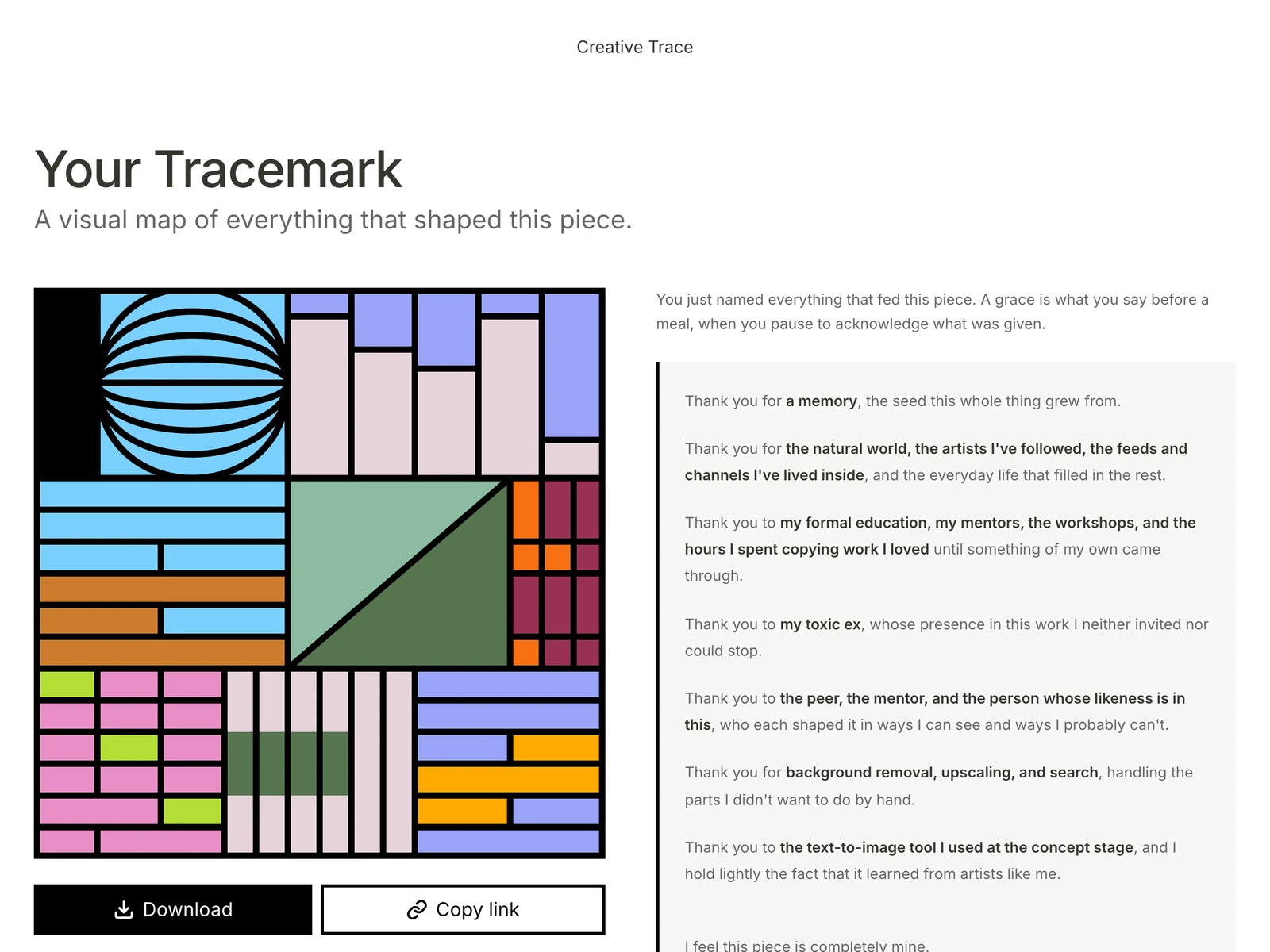
Tools that deal with AI in art give artists a switch: keep your work out of training data, or don't. Creative Trace asks about one piece instead, and everyone and everything that fed it. The answers become a Tracemark, a mark the same answers always rebuild, and a Grace, a first-person thanks in the shape of a prayer. We built it in the Ethics of AI course at Parsons and launched it at The New School's F(r)ictions symposium in May 2026.
The missing middle.
The tools artists have for AI (Glaze, Nightshade, NoAI tags) all make one request: don't use my work. None of them lets an artist say what's theirs in a piece a generator touched, and a lot of work is made that way now: a hand sketch fed to a generator, its output composited with handmade layers.
I ran into this myself. I recorded a lo-fi guitar piece, ran it through Suno, and liked what came back. Then I read the terms: uploading it gave Suno a perpetual license to train on my recording. The tool gave me the song and took some of my claim to it, and I had no language for that.
Ten questions about one piece. The questionnaire anchors to one recent piece and moves through three time horizons: what started it, what you were soaking in while you made it, and the years of training behind how you work. Then it asks who shaped it, including a ghost: someone or something in the piece you never meant to put there.
AI shows up in four places, as it does in practice: teacher, reference, helper and generator. Only the generator gets follow-ups: what it made, how much of it survived, and whose work you think it trained on.
TakenThree words for how much a reference shaped the piece. Barely, a little, a lot.
RejectedA percentage, or a slider that reads like one.
Eight patches, no score.
The Tracemark is a square of eight patches, each reading one slice of the answers. The same answers always draw the same mark. It shows who and what was involved, never a percentage of human against machine.
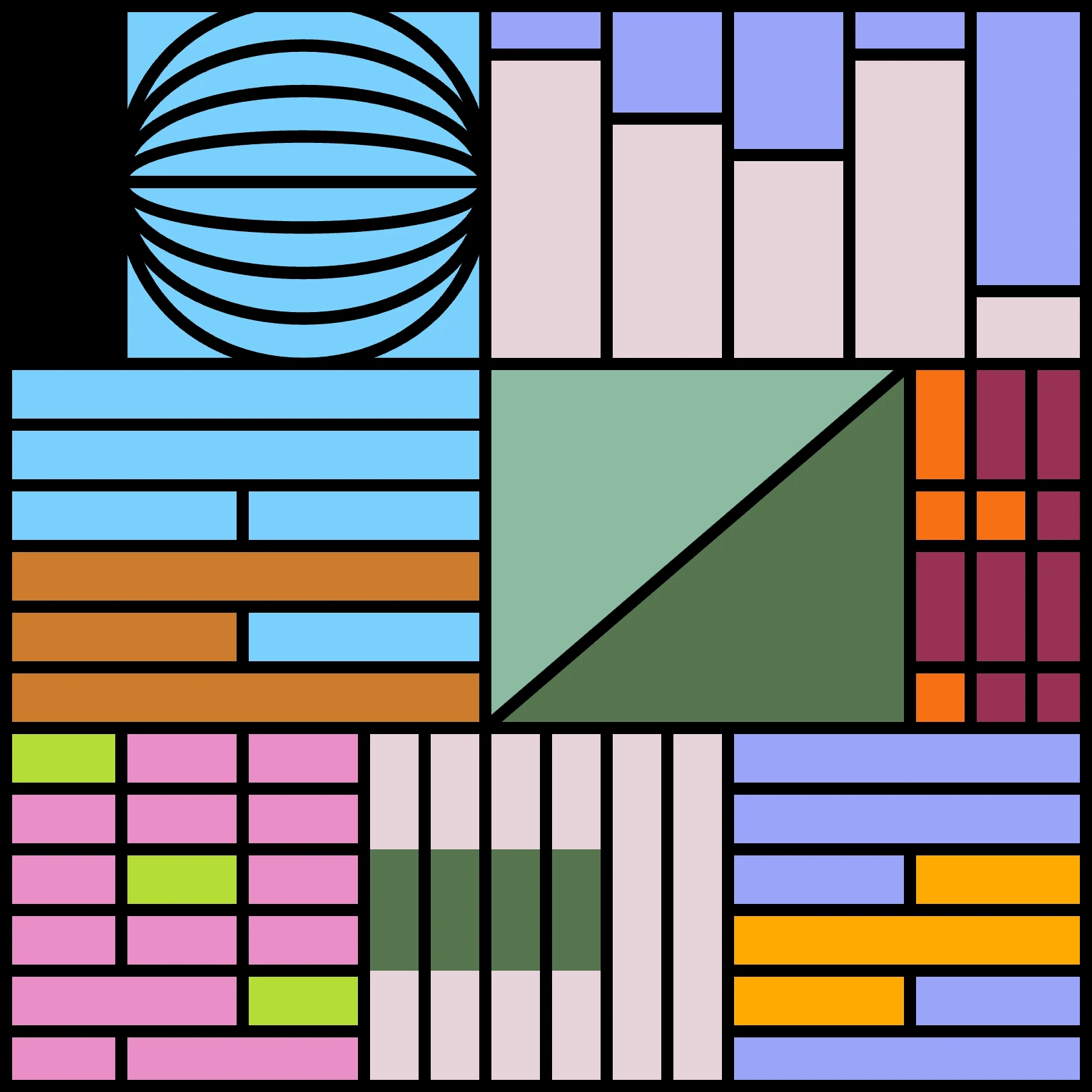
04 AI in the piece
Split when AI made part of it, solid when it made none.
TakenKeep felt ownership off the mark. It closes the Grace instead.
RejectedLet ownership change the mark. The first plan had it set how coherent the whole mark looked.
A grace before the meal.
A grace is what you say before you eat, a pause to name what was given. Claude Sonnet 4.6 writes one from the answers, thanking each source in turn and ending on the ownership answer. Naming what you owe is a different act from measuring it.
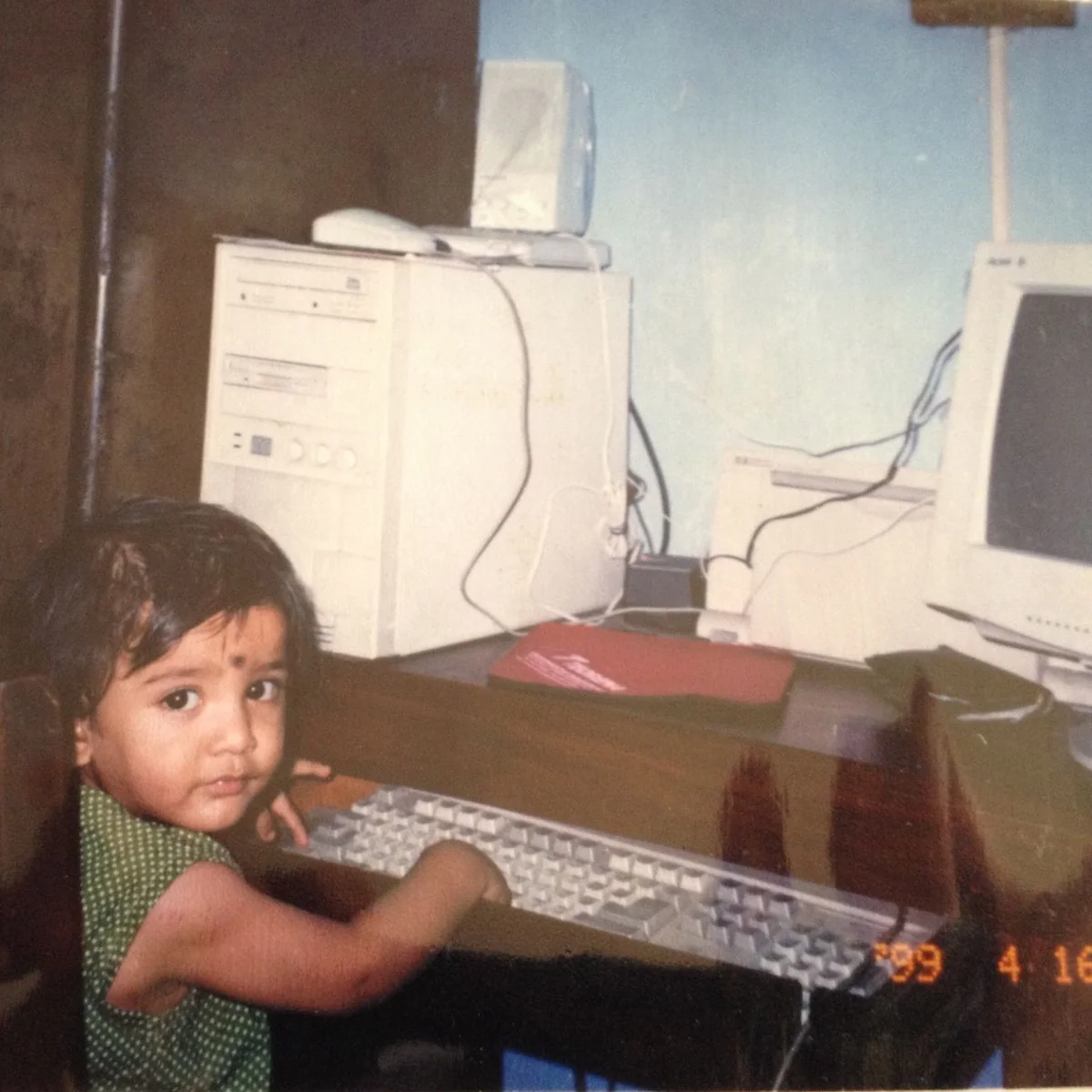
Thank you for the memory that seeded this, the thing I sat with before I made anything else.
Thank you for the natural world, everyday life, the music, the artists I've studied, and the feeds and channels I've curated, all of it sitting in me when I started.
Thank you to my formal education, my mentors, the workshops, and all the copying I did before I had my own hand.
Thank you to my toxic ex, whose presence in this work I neither invited nor could stop.
Thank you to the peer, the mentor, and the person whose likeness is in this, who each shaped something I couldn't have shaped alone.
Thank you to text-to-image generation at the concept stage, and I hold it loosely, knowing it trained on artists like me.
Thank you to the background removal, upscaling, and search tools that handled the parts I didn't want to do by hand.
I feel this piece is completely mine.
Let me sit with that.
TakenFirst person, said by the artist.
RejectedSecond person, narrated at them. "You feel this piece is completely mine. Sit with that."
TakenWrite the Grace once per submission and keep it.
RejectedWrite a fresh one on every visit.
I brought the idea and led the build. Paola Machuca Hernández and Yash Pawar made the visual system.
Looking back
In a tool about machines, I had to decide where the machine belongs. The mark is pure code, because a mark you can't reproduce is a decoration. The Grace uses a language model, because writing a thanks from a list is work a model does well and a form does badly, and the artist reads it first. One model, one job, on the warm side of the tool.
The rule I broke was the first one I wrote: soft proportions, no sliders that imply a measurement. The first build had a shelf you dragged references onto and a dot you slid between director and maker, with no numbers anywhere. Two days before the symposium I threw it out and moved the questions into a Tally form so we'd ship. References survived as words. Direction and ownership became one-to-ten scales. The Grace turns the ownership number back into words, but the artist still had to pick a number, in a tool whose whole argument is that authorship isn't one. Rebuilding that questionnaire is the first thing I'd do with more time.
Deterministic made the mark reproducible, not readable. On a portfolio, a Tracemark is a handsome grid where you can't tell a teacher from a collaborator. The legend that names each patch on hover is still on a branch. A provenance mark that needs its maker beside it is only half a provenance mark.
We kept collection light: no accounts, names or emails. Nothing in the answers or the visit counts can tell me whether anyone answered more honestly because they were thanking instead of grading. That was the bet the design rests on, and I have no evidence either way.